

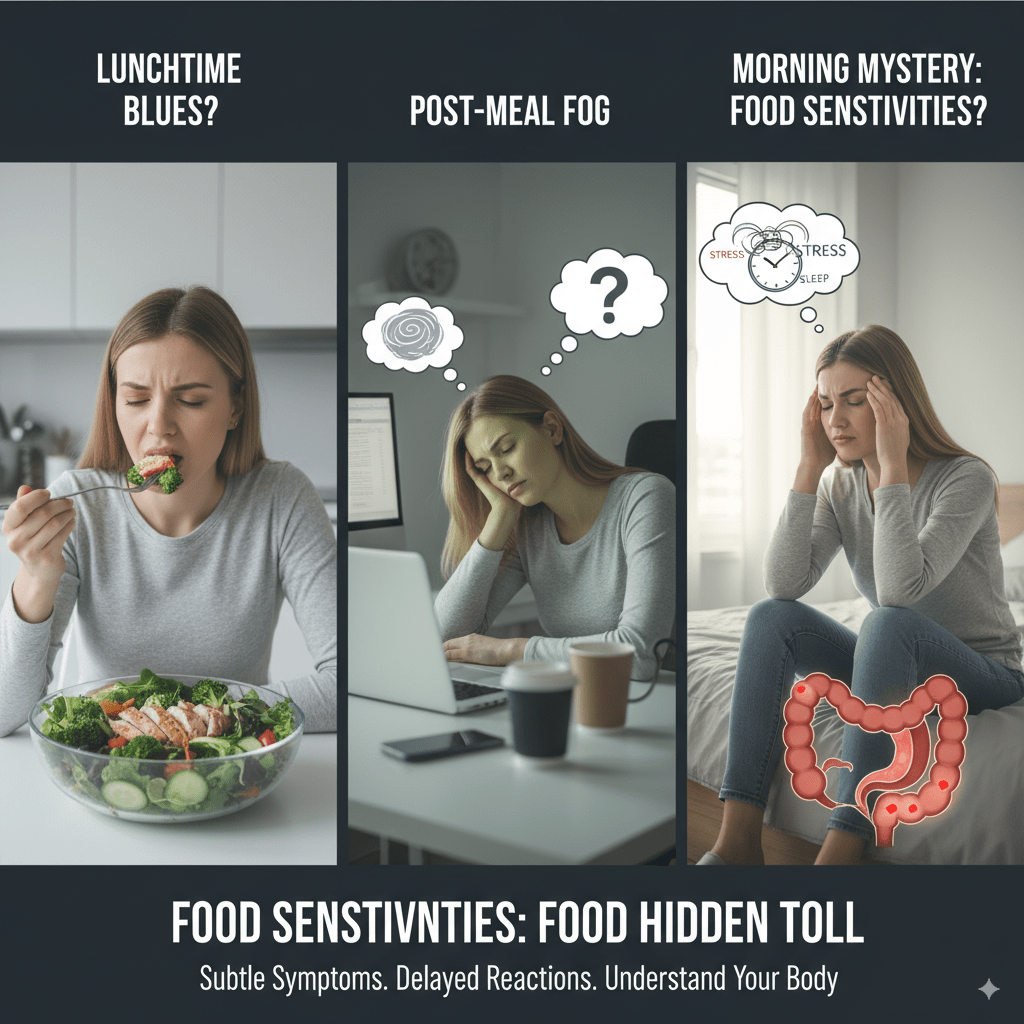
Imagine eating a “healthy” salad for lunch only to feel bloated, tired, and foggy for hours afterward. Or waking up every morning with headaches, wondering if stress or sleep is to blame—while your body is silently reacting to the foods you eat daily.
Food sensitivities are an underdiagnosed yet common issue that can affect anyone, from busy professionals juggling deadlines to parents trying to stay energized for their families. Unlike food allergies, which are easier to identify, sensitivities often create delayed, subtle symptoms that build over time.
This guide explores food sensitivities through the lens of functional medicine—a science-backed, root-cause approach to health. Backed by Shivani Bajwa, founder of NovoScan and member of the Indian Institute of Functional Medicine, this blog reveals how personalized testing, gut health restoration, and actionable nutrition changes can transform your well-being.
Understanding Food Sensitivities, Allergies, and Intolerances
Many people use these terms interchangeably, but they’re very different conditions.
| Condition | Cause | Reaction Time | Symptoms |
| Food Allergy | IgE-mediated immune response | Immediate (minutes–hours) | Hives, swelling, anaphylaxis |
| Food Intolerance | Digestive enzyme deficiency or chemical sensitivity | Within hours | Bloating, diarrhea, discomfort |
| Food Sensitivity | IgG-mediated immune response, gut permeability issues | Delayed (hours–days) | Fatigue, brain fog, skin issues, joint pain |
Food sensitivities are particularly tricky because symptoms appear long after you eat the offending food. This delay makes them easy to overlook, leading to years of discomfort and frustration.
Why Delayed Food Reactions Disrupt Health
When your immune system reacts to certain foods, it produces antibodies that trigger inflammation. Over time, this low-grade inflammation becomes chronic, affecting digestion, hormones, mood, and energy levels.
Common signs of food sensitivities include:
- Persistent bloating or stomach discomfort
- Fatigue or energy crashes
- Migraines or frequent headaches
- Skin rashes, acne, or eczema
- Joint pain and stiffness
Take the example of Asha, a 36-year-old marketing professional. She had recurring migraines and digestive issues for years. Standard tests came back normal, and she was advised to “manage stress.” A functional medicine evaluation revealed multiple sensitivities—gluten and dairy among them. After eliminating triggers and improving gut health, her migraines dropped from three times a week to once a month.
Functional Medicine: The Root-Cause Approach
Conventional medicine often focuses on managing symptoms rather than asking why they occur. Functional medicine takes a different path:
- It looks at genetics, lifestyle, environment, and diet together.
- It identifies root causes—like gut imbalances, chronic inflammation, or nutrient deficiencies.
- It creates personalized plans to reverse dysfunction and restore health.
At NovoScan, our Functional Medicine Health Kit empowers clients to take charge of their health:
- Advanced Testing: Food sensitivity panels, microbiome mapping, and nutrient analysis.
- Expert Interpretation: Insights from Shivani Bajwa, an industry leader and member of the Indian Institute of Functional Medicine.
- Personalized Plans: Tailored diet, supplementation, and lifestyle changes.
- Coaching Support: Ongoing functional health coaching for sustainable results.
Functional vs. Conventional Medicine for Food Sensitivities
| Aspect | Conventional Medicine | Functional Medicine |
| Testing | Limited (IgE allergies, basic labs) | Comprehensive panels (IgG, gut permeability, microbiome) |
| Approach | Symptom management | Root-cause investigation |
| Solutions | Medication, elimination trials | Personalized nutrition, gut healing |
| Outcome | Symptom suppression | Long-term resolution & resilience |
Food Sensitivity Testing in India: What Works and What Doesn’t
Food sensitivity testing is becoming more accessible in India, but quality varies widely.
Common Testing Options:
- IgG Food Sensitivity Testing
- Detects delayed immune responses to specific foods.
- Best for those with chronic, unexplained symptoms.
- Detects delayed immune responses to specific foods.
- Elimination Diets
- A cost-effective option that removes common trigger foods for 4–6 weeks, then reintroduces them systematically.
- A cost-effective option that removes common trigger foods for 4–6 weeks, then reintroduces them systematically.
- Comprehensive Gut Panels
- Evaluate gut microbiome diversity, inflammation markers, and intestinal permeability.
- Evaluate gut microbiome diversity, inflammation markers, and intestinal permeability.
Caution: Many “quick-fix” tests or generalized diets sold online aren’t accurate. Functional medicine focuses on interpreting results in context, not in isolation.
The Gut-Immune Connection: Why Your Gut Holds the Answers
Over 70% of your immune system is in your gut. When the gut lining is compromised (a condition often called “leaky gut”), undigested food particles can enter the bloodstream. This triggers the immune system, leading to chronic inflammation and sensitivities.
Factors that damage gut health include:
- Processed foods and sugar
- Frequent antibiotic use
- High stress
- Poor sleep
- Environmental toxins
Healing your gut often reduces food sensitivities significantly, making gut health the foundation of long-term wellness.
How to Start Healing: Actionable Steps
Even before formal testing, you can make changes that help reduce symptoms:
- Track Symptoms: Keep a food diary and note how you feel 12–48 hours after eating.
- Focus on Whole Foods: Minimize processed and packaged foods.
- Add Probiotics and Fiber: Support microbiome diversity naturally.
- Stay Hydrated: Water aids digestion and detoxification.
- Seek Expert Guidance: A certified functional medicine practitioner can help you personalize your approach.
Why Functional Health Coaching is a Game-Changer
Testing gives you answers; coaching helps you implement them. Functional health coaches provide:
- Accountability: Regular check-ins to track progress.
- Emotional Support: Change is easier when you feel understood.
- Education: Practical tips for eating out, grocery shopping, and meal prep.
At NovoScan, this one-on-one guidance turns lab data into life-changing results.
The NovoScan Advantage: Science Meets Empathy
Shivani Bajwa built NovoScan to fill a crucial gap: accessible, science-backed, root-cause care for Indians struggling with chronic conditions. Our signature NovoScan Health Kit and testing protocols are designed to uncover what’s really driving your symptoms—without overwhelming you with medical jargon.
Whether you’re a parent trying to help your child, a professional dealing with low energy, or someone seeking to optimize long-term health, NovoScan meets you where you are and guides you step-by-step.
Conclusion: Take Back Control of Your Health
Food sensitivities aren’t just a passing inconvenience; they can silently erode your energy, mood, and overall health for years. With functional medicine, you get answers, not guesses—and a plan that’s designed just for you.
If you’re ready to stop guessing and start healing, book your NovoScan Health Kit today. Discover the foods your body loves (and those it doesn’t), restore your gut health, and feel the difference in weeks.
🌱 Take the first step toward a healthier, more vibrant life—because your body deserves better answers.
FAQs
1. How do food sensitivities differ from autoimmune conditions?
Food sensitivities involve an IgG-mediated immune response to certain foods, while autoimmune diseases occur when the immune system mistakenly attacks the body’s own tissues. In India, many people with autoimmune issues also have undiagnosed food sensitivities. Addressing sensitivities through functional medicine testing and gut healing protocols can reduce inflammation and support immune balance.
2. Are food sensitivity tests in India reliable?
Food sensitivity tests in India can be highly accurate when interpreted by a functional medicine practitioner. IgG testing, elimination diets, and gut microbiome assessments together provide a complete picture of hidden food reactions. DIY tests or generic diet charts are often misleading, so professional evaluation ensures reliable results.
3. Can stress make food sensitivities worse?
Yes, chronic stress disrupts digestion, weakens gut lining integrity, and increases food sensitivity reactions. Stress is a major overlooked factor in India, where work pressure, poor sleep, and environmental toxins worsen gut health. Functional medicine uses tools like breathwork, yoga, and adaptogens to reduce stress-related inflammation.
4. Are food sensitivities permanent?
Unlike allergies, which are usually lifelong, food sensitivities can often be reversed. Functional medicine protocols—focused on gut healing, detoxification, and nutrient optimization—help many people reintroduce previously reactive foods after 3–6 months of a personalized diet plan.
5. What are some surprising foods that trigger hidden sensitivities?
Common culprits in India include wheat, dairy, coffee, soy, nuts, corn, and even “healthy” foods like oats or tomatoes. These foods can trigger delayed immune reactions that cause fatigue, bloating, or joint pain. Personalized sensitivity testing identifies these unexpected triggers quickly.
6. How long does it take to feel better after eliminating trigger foods?
Most people notice improvements in 2–4 weeks after eliminating problematic foods, but full inflammation recovery and gut healing may take 3–6 months. With expert guidance from a functional medicine coach, the process is faster and sustainable, helping you regain energy and digestion naturally.